

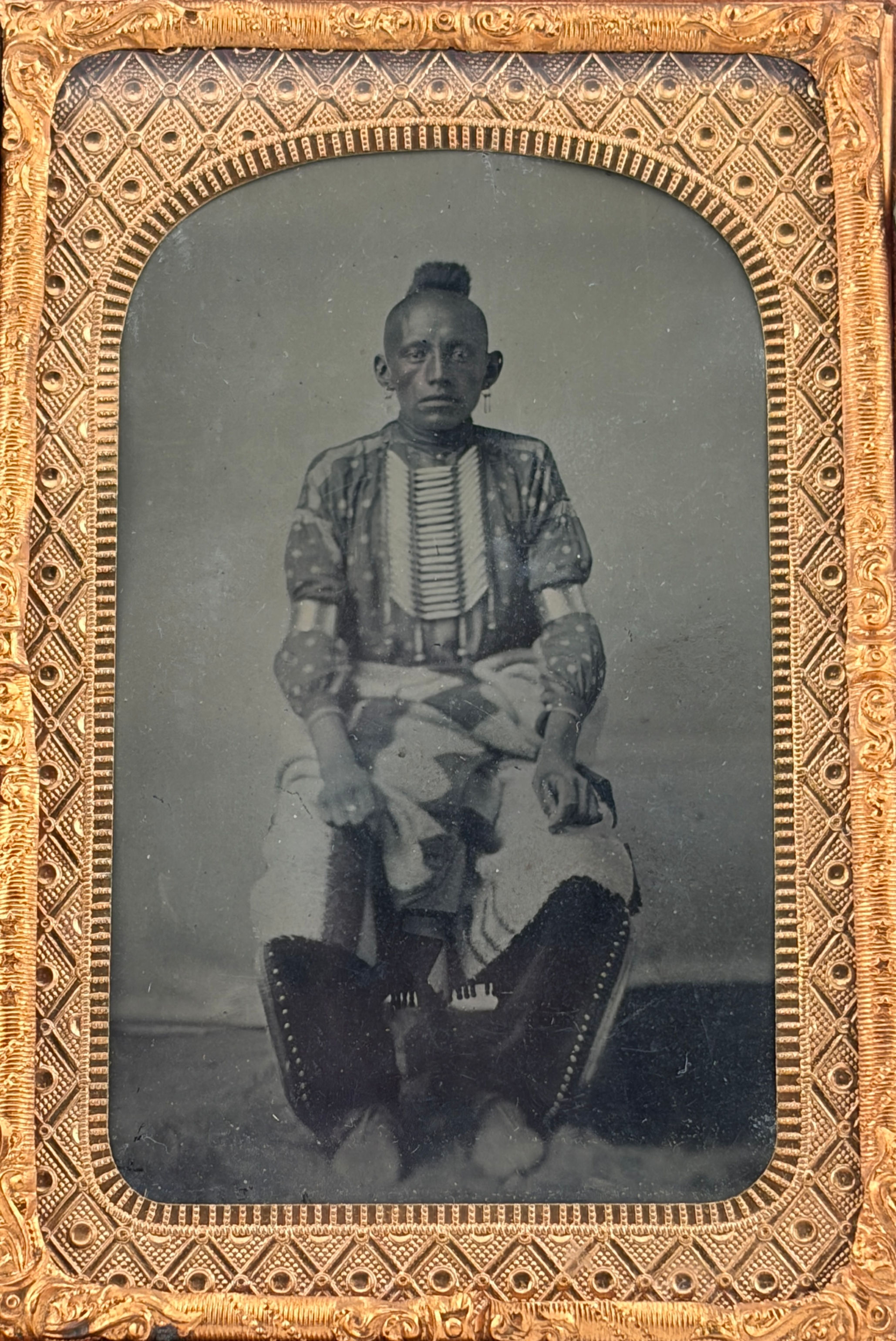

Rare 1/8th Plate Tintype of a Seated Pawnee Man in Traditional Attire
Rare 1/8th Plate Tintype of a Seated Pawnee Man in Traditional Attire
This exceptional 1/8th plate tintype presents a compelling and historically significant portrait of a seated Pawnee man captured during a formal studio session in the mid-to-late 19th century. The subject exudes quiet dignity and composure, seated barefoot or in simple moccasins with hands resting calmly in his lap—a pose that conveys both strength and serenity typical of period Native American photographic portraits.
His attire reflects classic Plains Indian men's fashion of the era: a patterned shirt or jacket of bold stripes, spots, and layered elements, likely fashioned from calico trade cloth or wool with decorative banding. Arm bands (possibly beaded or quilled) add detail, and prominent earrings—metal, bead dangles, or similar—complete the ensemble. Most strikingly, his hairstyle features a distinctive upright central crest or tuft, often termed a roach or stiffened scalplock. Among the Pawnee and other Southern/Central Plains tribes, men traditionally shaved or cropped much of the head, leaving a strip or tuft at the crown that could be stiffened with grease, clay, or attachments for ceremonial, warrior, or clan purposes. Historical accounts and portraits of Pawnee men from the 19th century frequently depict similar erect styles—sometimes enhanced with feathers, dyed elements, or roach spreaders—symbolizing status, identity, or affiliation. This hairstyle, combined with the formal yet traditional presentation, makes the image a rare visual record of Pawnee cultural continuity during a time of significant change.
Housed in an original case (with gilt mat and preserver if intact), this tintype is a superb example of early photographic documentation of Native American life on the Plains. Such small-format portraits of identified or identifiable tribal members are highly sought after by collectors of Native American history, Plains Indian material culture, antique photography, and ethnographic Americana. Comparable images of Pawnee individuals from the 1860s–1880s have appeared in museum collections, historical archives, and auctions, underscoring their enduring value as authentic glimpses into tribal heritage.
This piece stands out for its sharp detail, strong contrast, and evocative subject matter—ideal for serious collectors or institutions focused on Indigenous American portraiture. Condition appears excellent based on description; minor typical aging with bends present but hard to see (light toning or edge wear) is common in period tintypes but does not detract from its impact. A standout addition to any collection of 19th-century Native American imagery!